Scalloped Potatoes Recipe: A Tropical Delight
Introduction to Scalloped Potatoes Recipe
When thinking of dinner recipes, few dishes evoke the same sense of nostalgia and comfort as scalloped potatoes. This incredible dish combines tender potatoes with a creamy, cheesy sauce that transforms a humble vegetable into a culinary masterpiece. Perfect for gatherings or family dinners, scalloped potatoes appeal to the hearts and palates of individuals across all dietary preferences. Whether you’re cooking for kids who won’t touch their veggies or impressing guests at a dinner party, this recipe has your back.
What makes scalloped potatoes even more appealing is their ease of preparation. With only a handful of ingredients, most of which are commonly found in your pantry, you can whip up a comforting side dish without spending all day in the kitchen. Additionally, this recipe can easily be adapted to suit various dietary needs, including vegan and gluten-free options, providing an inclusive dish that everyone can enjoy. Imagine a comforting creamy layer of scalloped goodness, mingling beautifully with your main course! It’s not just a dish; it’s a crowd-pleaser that encourages culinary creativity while ensuring that healthy eating remains interesting.
Benefits and Advantages of Scalloped Potatoes Recipe
The scalloped potatoes recipe is brimming with benefits that make it an excellent addition to your rotation of dinner recipes. First, its simple ingredient list allows for easy preparation, perfect for busy parents, working professionals, and students alike. With minimal chopping and mixing required, you can easily follow these instructions even if you’re just getting comfortable in the kitchen.
Health-wise, potatoes are packed with essential nutrients, including potassium and vitamin C, making them a great addition to a balanced diet. Additionally, they provide energy-dense carbohydrates, making them an excellent choice for those needing lasting energy. You can also opt for lower-calorie cream alternatives to achieve a lighter version without sacrificing taste.
Moreover, scalloped potatoes are expressly adaptable. If you’re part of a dietary-conscious community, you can easily substitute dairy products with plant-based alternatives such as almond milk or coconut cream, making this recipe vegan-friendly. This flexibility ensures that families with differing dietary preferences can gather around the table and enjoy the same comforting dish.
Overall, scalloped potatoes stand out among dinner recipes because they combine flavor, comfort, and nutrition, proving that even a simple vegetable can become a gourmet treat.
Ingredients Overview
Essential Ingredients for Scalloped Potatoes Recipe
To create the perfect scalloped potatoes, gather the following ingredients:
- Potatoes (4 cups, thinly sliced): The star of the dish, providing texture and carbohydrates.
- Heavy cream (2 cups): For a rich and creamy base. For a lower-calorie option, consider using unsweetened almond milk or low-fat cream.
- Butter (4 tablespoons): Adds richness and flavor. Vegan butter can be used for a plant-based version.
- Shredded cheese (2 cups): Sharp cheddar is ideal, but feel free to use mozzarella or a vegan cheese alternative to customize to your taste and dietary needs.
- Onion (1 medium, finely chopped): Offers a savory depth to the flavor profile.
- Garlic (3 cloves, minced): Enhances the overall taste.
- Salt (1 teaspoon) and pepper (1 teaspoon): Essential for seasoning.
- Fresh herbs (e.g., thyme or rosemary), optional: For added flavor and aesthetics.
These ingredients not only contribute to a luscious and savory outcome but can be tailored to fit various dietary lifestyles, from vegan to gluten-free.
Dietary Substitutions to Customize Your Scalloped Potatoes Recipe
If you or anyone you’re cooking for has specific dietary concerns, here are some straightforward substitutions you can use:
- Vegan/Dairy-Free: Substitute heavy cream with coconut cream or cashew cream. Use vegan butter and your favorite plant-based cheese.
- Gluten-Free: Ensure any thickening agents or pre-packaged ingredients are labeled gluten-free. This dish typically uses no gluten-containing products, making it naturally safe for those with gluten sensitivities.
- Low-Calorie: Use low-fat milk instead of heavy cream and reduce the amount of cheese without forgoing flavor by adding more herbs and spices.
- Added Vegetables: To increase nutritional value, consider mixing in spinach, kale, or even diced carrots as you layer the potatoes.
These dietary adaptations ensure that this scalloped potatoes recipe remains accessible to everyone at the dinner table, truly embodying the essence of inclusive dinner recipes.
How to Prepare the Perfect Scalloped Potatoes Recipe: Step-by-Step Guide
Creating the perfect scalloped potatoes is straightforward and incredibly rewarding. Follow these easy steps to make your dish:
-
Prepare the Potatoes: Peel (if desired) and thinly slice 4 cups of potatoes. Aim for uniform thickness, about 1/8 inch, to ensure even cooking.
-
Preheat the Oven: Preheat your oven to 350°F (175°C) so it’s ready for baking.
-
Sauté Aromatics: In a skillet, melt 4 tablespoons of butter over medium heat. Add 1 medium onion (finely chopped) and sauté for about 4-5 minutes until translucent. Add 3 minced garlic cloves, cooking for an additional minute until fragrant.
-
Prepare the Cream Mixture: In a bowl, whisk together 2 cups of heavy cream with salt (1 teaspoon) and pepper (1 teaspoon). Add sautéed onions (with garlic) to this mixture.
-
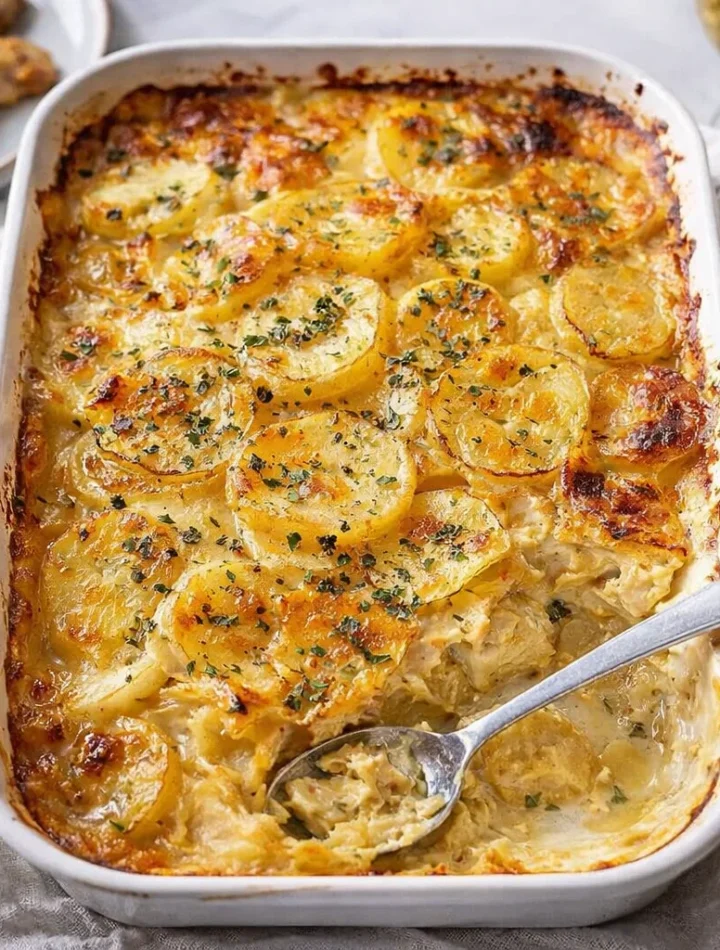
Layer the Potatoes: In a greased 9×13-inch baking dish, layer half of the sliced potatoes. Pour half of the cream mixture over the first layer, then sprinkle with 1 cup of shredded cheese.
-
Repeat Layers: Add another layer of potatoes, pour the remaining cream mixture over, and top with the remaining cheese for a golden, bubbly finish.
-
Cover the Dish: Cover the baking dish loosely with aluminum foil and bake for about 45 minutes. This allows the potatoes to cook through without browning too soon.
-
Uncover and Bake: After 45 minutes, remove the foil and bake for another 25-30 minutes until the top is golden and bubbly.
-
Test for Doneness: Insert a knife or fork into the potatoes; they should be tender. If they are still firm, bake for an additional 10 minutes.
-
Cool Before Serving: Let the dish sit for about 10-15 minutes before serving to allow it to set and make for easier slices.
With these straightforward steps, anyone can master scalloped potatoes, ensuring they become a beloved go-to in your arsenal of dinner recipes.
Mastering Scalloped Potatoes Recipe: Advanced Tips and Variations
While this scalloped potatoes recipe is a classic, there are many ways to put your own twist on it. Here are some expert tips and variations to consider:
- Add Protein: For a heartier version, mix in cooked crumbled bacon, ham, or even shredded chicken. This can transform the dish into a standalone meal.
- Experiment with Cheeses: Try different cheese blends! Gruyère and mozzarella can create a unique flavor profile. Or go bold with blue cheese for something different.
- Herbs and Spices: Add fresh herbs such as rosemary or thyme directly into the layers for flavor depth. Spice lovers might enjoy adding a pinch of cayenne or paprika for heat.
- Nutritional Yeast: If you’re vegan, consider mixing in nutritional yeast with the cream to enhance cheesiness without adding dairy.
- Creamy Mushroom Variation: Incorporate sautéed mushrooms in between the layers for an earthy flavor.
- Make it Ahead of Time: You can prepare this dish a day in advance. Simply assemble it, cover tightly with plastic wrap, and refrigerate. When ready to cook, just add a little extra baking time since it’ll go in cold.
With these creative ideas, you can make scalloped potatoes uniquely yours among your favorite dinner recipes.
How to Store Scalloped Potatoes Recipe: Best Practices
If you’re lucky enough to have leftovers, proper storage can keep your scalloped potatoes tasty for days. Here are the best practices for refrigeration, freezing, and reheating:
-
Refrigeration: Allow the dish to cool completely after baking. Transfer it to an airtight container or cover it tightly with aluminum foil. It can stay fresh in the fridge for about 3 to 5 days.
-
Freezing: For longer storage, you can freeze scalloped potatoes. First, let the dish cool completely, then cut it into serving portions. Wrap each portion tightly in plastic wrap, followed by aluminum foil, and store in a freezer-safe container. Frozen scalloped potatoes can last up to 2 to 3 months.
-
Reheating: To reheat refrigerated scalloped potatoes, simply place them in a preheated oven at 350°F (175°C) for 20-30 minutes or until heated through. If frozen, let them thaw in the refrigerator overnight and then reheat as mentioned. For best results, cover with foil to avoid drying out.
These practices ensure your scalloped potatoes remain delicious and satisfying, providing convenience for those busy weeknight dinner recipes.
Nutritional Value of Scalloped Potatoes Recipe
Understanding the nutritional profile of your scalloped potatoes can help you make informed choices about your meal. Below is a breakdown of estimated nutrition information per serving (based on the recipe above, not including variations):
- Calories: Approximately 320 calories
- Total Fat: 19g (of which saturated fat is 11g)
- Cholesterol: 55mg
- Sodium: 560mg
- Total Carbohydrates: 36g
- Dietary Fiber: 4g
- Sugars: 1g
- Protein: 7g
This nutrition information is a rough estimate and can vary based on ingredient substitutions and portion sizes. As you prepare this dish, consider variations to enrich it or lower calories, preserving the comfort factor that makes it so appealing. A well-rounded meal encompassing scalloped potatoes can easily match the nutrient profiles found in many healthier dinner recipes.
FAQs: Frequently Asked Questions About Scalloped Potatoes Recipe
1. Can I make scalloped potatoes ahead of time?
Yes! You can prepare the dish a day in advance and refrigerate it before baking. Just add extra time to the cook time when you’re ready to bake it.
2. What types of potatoes are best for scalloped potatoes?
Yukon gold or Russet potatoes work best because they hold up well during baking, providing a creamy texture while remaining tender.
3. Can I use a different type of milk for this recipe?
Absolutely! You can use almond milk, cashew cream, or even oat milk as a substitute for heavy cream. However, be aware of how these alternatives may alter the overall flavor and texture.
4. Are scalloped potatoes gluten-free?
Yes, this recipe is naturally gluten-free if you avoid any additives that contain gluten while maintaining all your ingredients.
5. What are some ways to customize scalloped potatoes?
You can add different herbs, cheeses, or cooked meats to bring new flavors. Adding vegetables like spinach or broccoli can increase nutritional value and create additional textures.
Incorporating scalloped potatoes into your meal repertoire can be a rewarding gastronomic experience. With their warmth, versatility, and satisfying flavors, they can transform an average dinner into a delightful occasion. Enjoy creating your own version of this classic dish!